

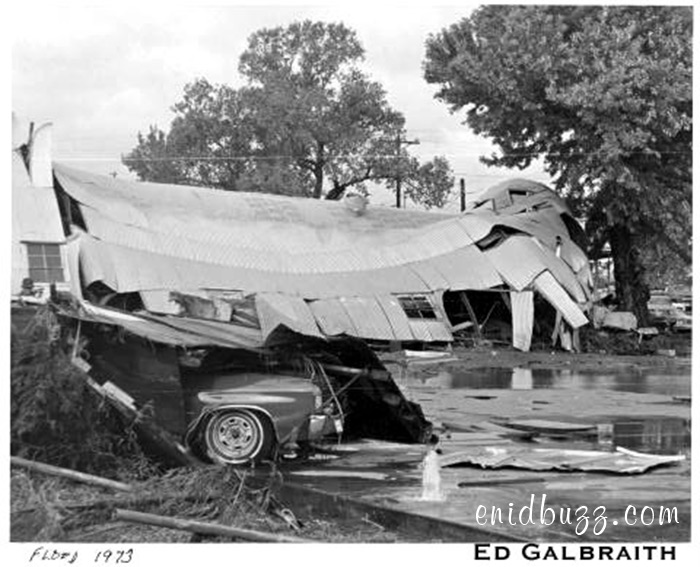
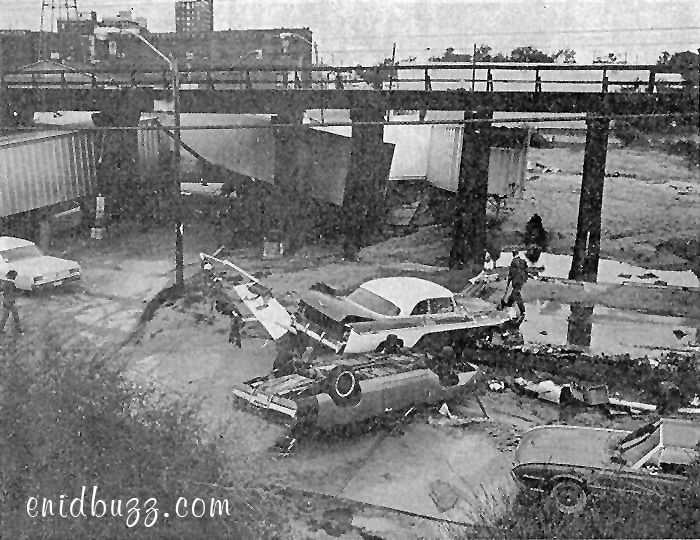
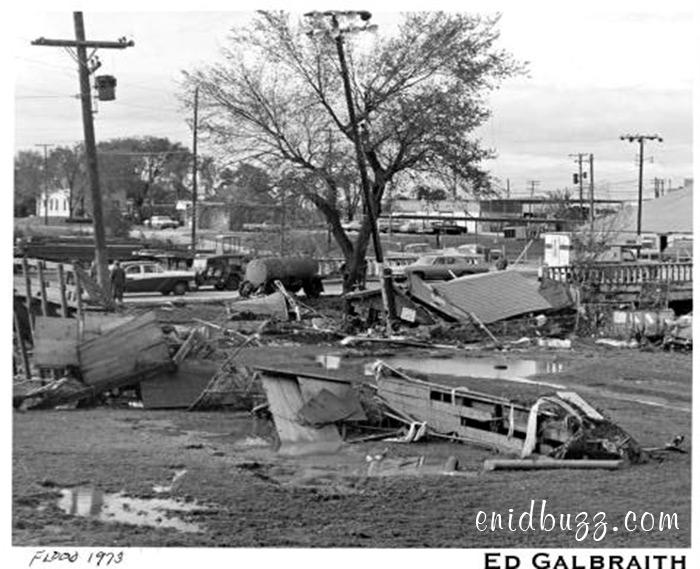
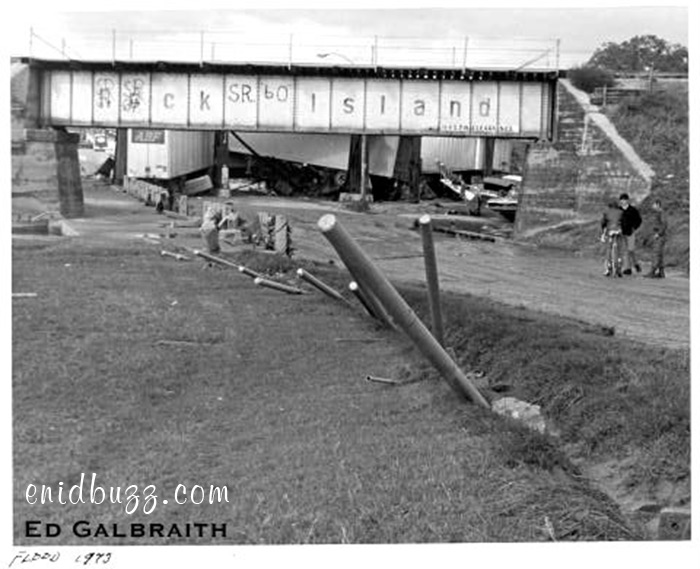
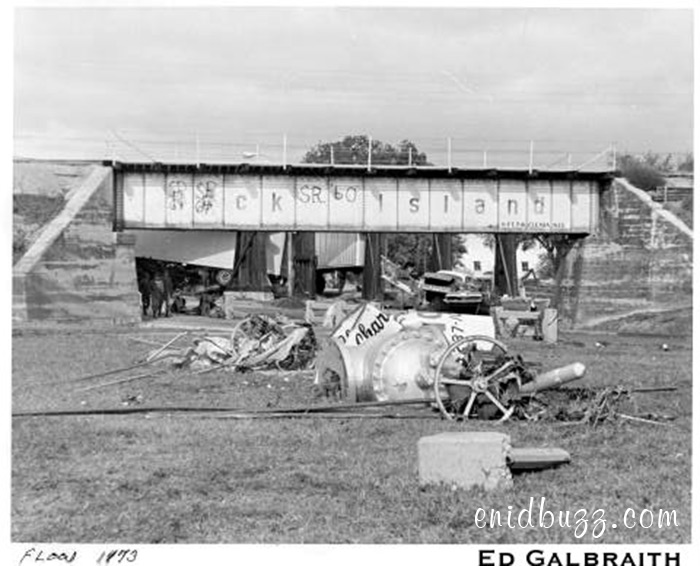
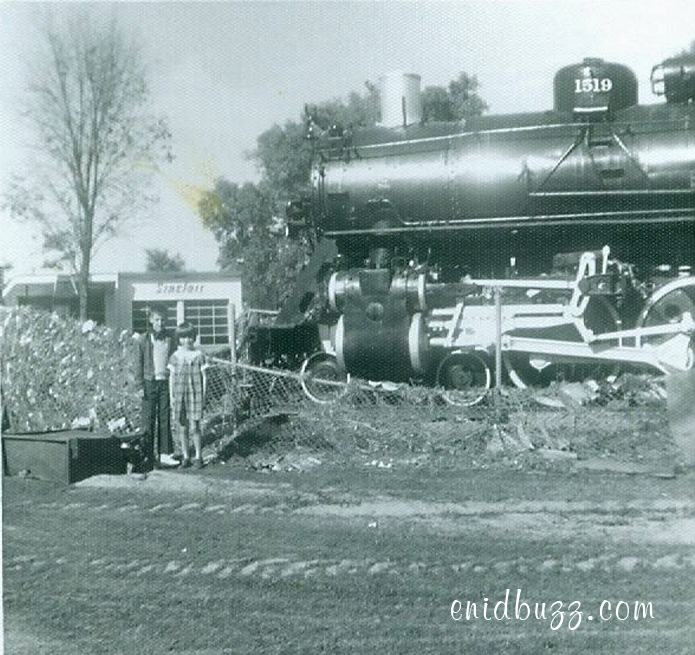
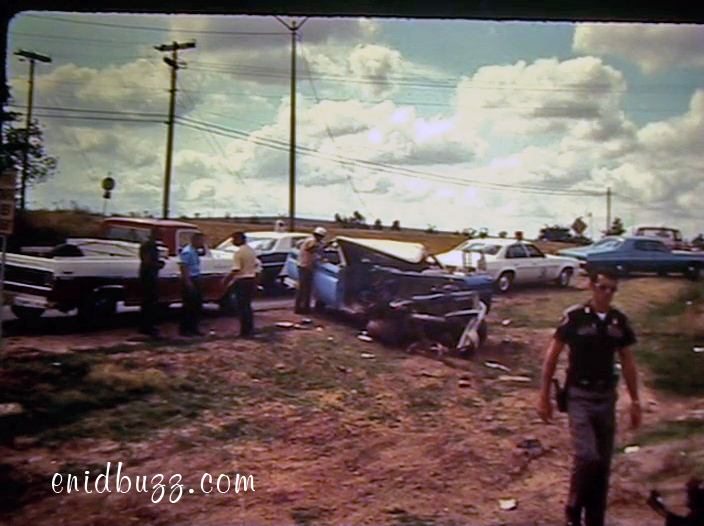
ENID, OK - The “Enid Flood” took place October 10 and 11 of 1973. The storm was caused by a locally intense thunderstorm that was centered over Enid. This storm produced the greatest urban rainfall on record in Oklahoma. Rainfall accumulations were 15 to 20 inches within a 100 square mile area. A recorded 2 inches fell in 3 hours.
–
The cause of the storm was a low pressure center that moved northeastward along a slowly moving cold front. These two systems stalled over north-central Oklahoma, depositing record-breaking rainfall. The 24-hour rainfall total at Enid of 15.68 inches exceeded the previous record which occurred September 3-4, 1940 (at Sapulpa). Unofficial reports have put the amount at 20 inches of rain.
–
The rain in Enid actually fell in about 12 hours, with 75 percent of it falling in 4 hours. The severe flash flooding that resulted from the rainfall in Enid destroyed or severely damaged 300 homes and 40 businesses. The rainfall also contributed to nine deaths. In Garfield County alone, property damages were estimated at 8 million dollars, with damages to crops and land that climbed to some 13 million.
-
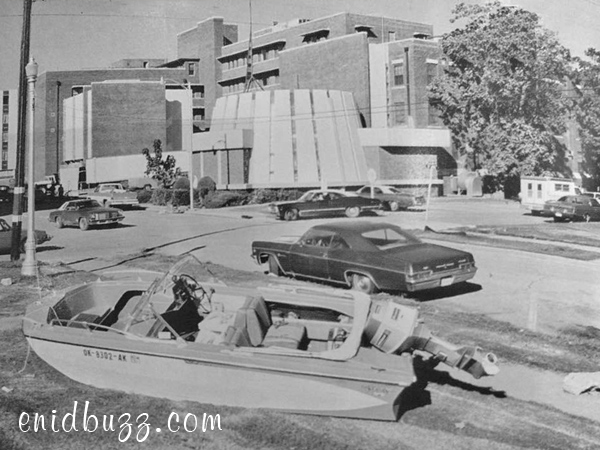
-
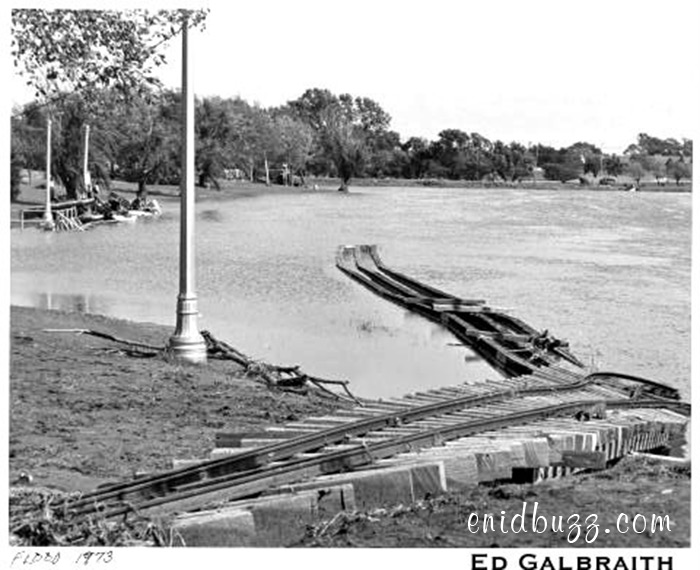
-
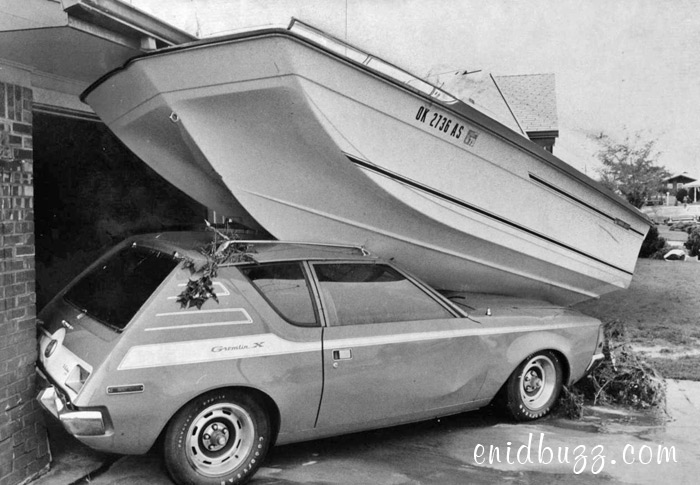
-
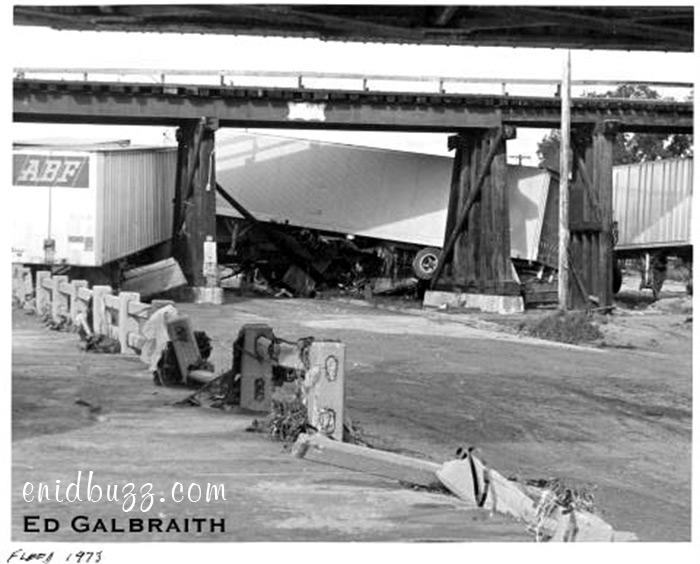
-
-
-
-
-
-
-
-
-
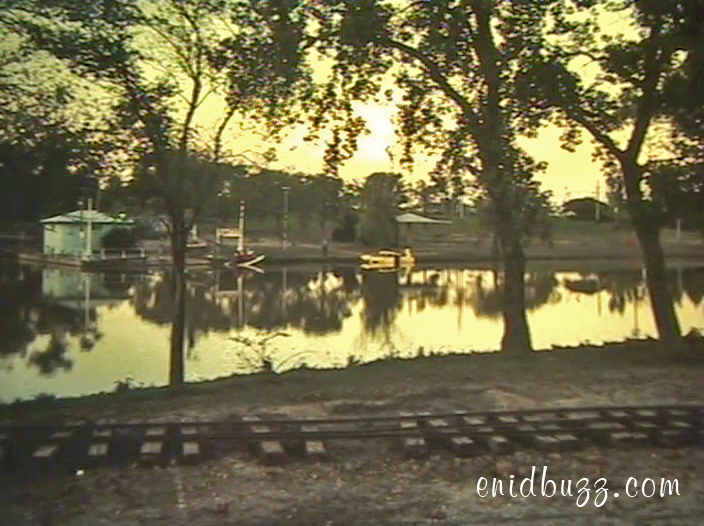
-
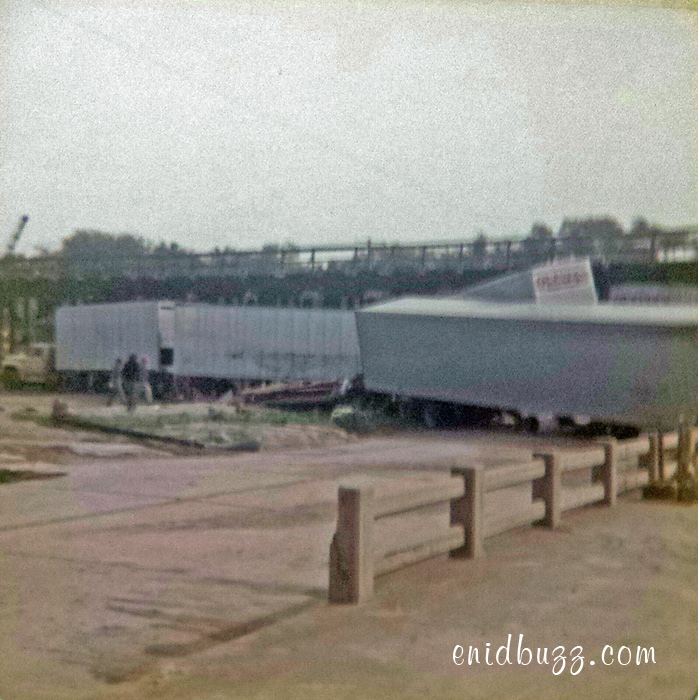
-
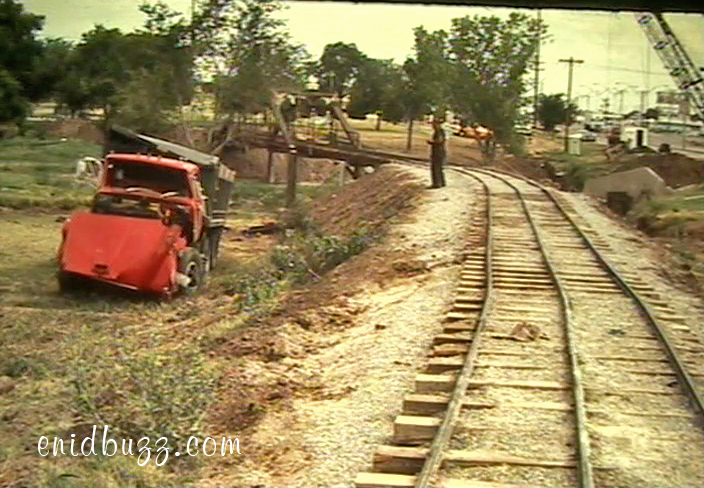
-
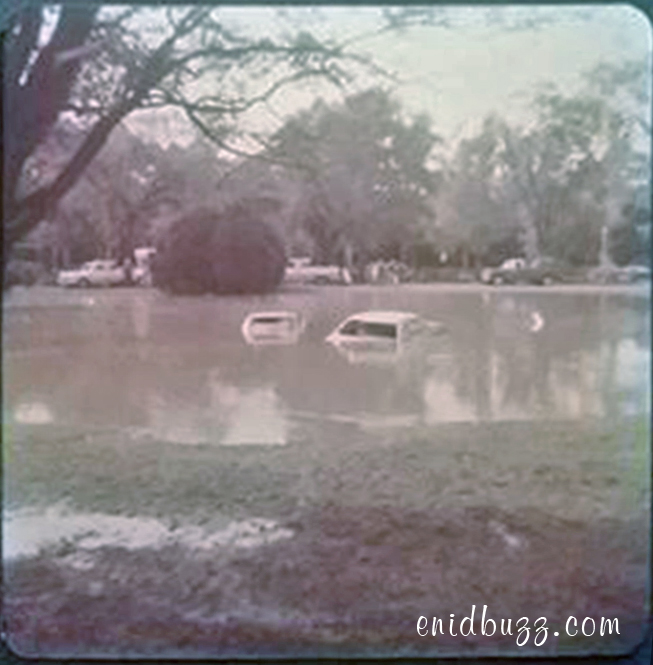
-
South of St. Mary's. Photo courtesy Mike and Wilma Nixon.
-



Thanks. I was not living in the area at the time of this. I learned about it, because my aunt, uncle, & cousins were living in Brookside and flooded there. My take has always been that the flooding was mostly there in Brookside, but this set of pics adjusted that idea.
What an interesting story John. I never knew about the flood because I was living in Nashville, TN.
I remember this well. We lived at 1205 W. York. We were in the basement watching TV. Our basement had those windows that were kind of like a hole in the ground, right next to the foundation, allowing light into the basement. My little sister, 3, said “Look at all the water”. We all looked and the window ‘boxes’ had filled with water and it was starting to pour into the basement. Basement flooded a bit. Next day no school. I was in 5th grade. Rode my bike around the next day. Lots of sand in the road. Found a $5 bill in the sand. Took it to Next Door and had lunch, just like a big kid!
We were in Fairmont, planning to go to Enid for a church music event. My mom called and told us not to come because Enid was floodingn. We didn’t believe her because it wasn’t even raining in Fairmont!
I was 5 at the time and remember my grandma, who worked at St. Mary’s, getting stuck at work and people taking boats to pick up others stuck there as welll.
I was at St. Mary’s hospital, my husband ( at the time ) had been in motorcycle accident. I was there the night of the rain, went out to move my vehicle away from the creek around 7 PM. The water picked me up and moved me about 10 inches. I decided to leave my car Where it was. When the hospital lost power the generator came on and immediately drowned out, The next morning I found my car domino stacked on top of several others. The rear wheel was over my head, I stand 5 foot two. The National Guard brought boxed meals over for the patients, I helped deliver them to the rooms and checked on patients as the call lights did not work .
We had 3 1/2 feet of water in our new home in Valley View addition near Boggy creek. We had to lock arms and Wade out in water to our chest in an emergency. The water came in so fast. Got to end of street, and spent the night with several other people. No power.
I was living in Enid then. I have many memories of that evening and night and the next day.
I remember that day pretty well, I was a paperboy tho had a route on the East side and when I got out of school that day the clouds were building like crazy over Enid. I never liked throwing papers in the rain and by 7 pm that evening our VW bug we threw the papers out of the moon roof was floating in water over the curbs on North 18th street. We never finished the route that evening.
By midnight I was trying to make it home from the 2800 block of East Maple and the intersection of 26th and Maple was a raging river nearly 100 feet wide…..we turned around and went to 30th street and the water had begun to cover the highway.
A firetruck was already trying to either rescue someone on the bridge south of Market St. or they were trying to get Into the Brookside Addition….I know you could hear people screaming for help that were as we found out later, on the roof of the houses near the creek.
To put it mildly, the event was traumatic. People blamed the city for not keeping the creeks free of tree growth. You never knew who was going to be found next, the missing person list was long.
It took several weeks for our yard to dry out.
My brother-in-law was stationed in Turkey on a missile base and they got news of the flood a day or two later in a military paper.
Everyone called it a 100-year flood but I think Fairmont for a rain that nearly rivaled it just a few weeks later.
Ironically, a flood back in 56-57 provided us with a home that my father salvaged by moving an old shotgun style home that had washed down a creek.
He had it moved onto a tax lot He had bought and we lived there for the next 8 years.
We had two children at the time Angela and Dustin. The water was coming up so high at the house I decided to drive about a block to my parents house ( bad idea to drive through water ) we had to cross the Boggy Creek bridge on West Oklahoma. There was already water running across the bridge. When we got to their house I had to carry the kids through about waist deep water to get in the house . The water was up almost to the car windows . We were very lucky God was with us .
We were in the Navy in Japan when this happened. My MIL sent us the ENEAGLE and still have it now.
We lived on the west end of Ponca St neat S Johnson. My husband was at work in downtown area. Our daughter was taking swimming lessons at the high school pool. It had been raining pretty hard but since pool was inside I decided to go ahead and go. No one was there. I headed back home and turned off of Van Buren to get to Ponca, when I got almost home one of intersections was flooded which I went through. Fortunately it didn’t flood the car and was only about 3 feet of flooded wide. I was hearing news on radio and was started to get concerned. Got home and looked in back yard which had a big ditch just past our yard, water was overflowing into our yard. Thankfully the yard had a grade and didn’t get into our home. My husband couldn’t come home when his shift ended because Garriott and Van Buren were flooded at the old Highway Patrol office. We heard it was nearly to the ceiling in there. He was able to come home the next day.
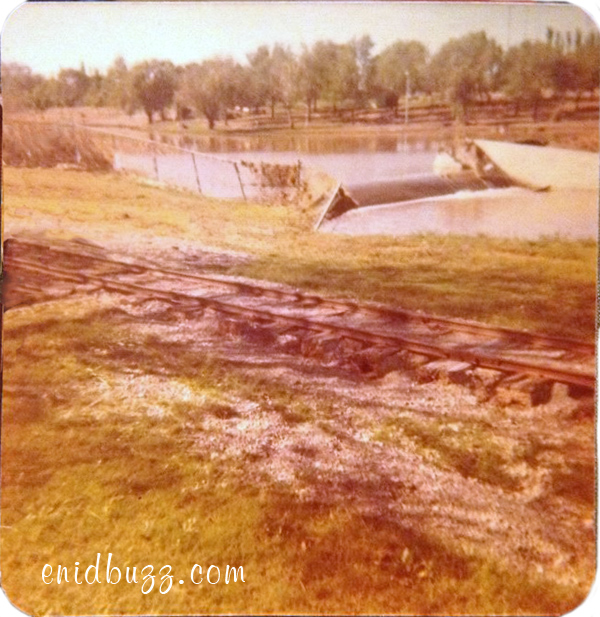
I was six years old living at 106 N. Watson Street. The oldest of three boys, my Dad, a former Vance T-38 instructor pilot, was working on his masters degree over at OSU after his Viet Nam tour. He commuted back and forth from Stillwater and was not home that day. I remember the afternoon sky turning dark and green. Menacing. We were finishing up errands at Kmart on West Garriott. Mom gave in and bought brother Dave and I airplane model kits to build when we got home. Dinner was normal and the TV was on watching the news. We built our little airplane models which was a nice diversion from the weather. I could tell my Mom was getting nervous. As it got dark, it started raining and storming very hard, so much so that water was leaking through the ceiling in various places around the house. Mom had a half dozen pots strategically positioned to catch the water. I remember talking to my Dad on the phone and giving him my impression of the evening. I was scared. There was a tornado watch going on as well. When the tornado siren went off on the telephone pole right outside our house, Mom said, ‘grab your pillows,’ and packed us into the bathtub in the one bathroom we had. With all the drama going on, the thing I was most concerned about was breaking my newly built airplane model while being crammed in the tub with my brothers and all those pillows! Funny how a kid’s mind works. We never lost our electricity, and I remember standing on our porch during a break in the storms and seeing that our street was completely flooded. I could see neighbors out investigating the damage as well. Dad made it home that night which meant we had to go check things out the next morning. I remember seeing railroad tracks wrapped around a tree at Meadow Lake Park. The bigger bridge across the lake was gone. A tornado had touched down in a neighborhood and I remember viewing the damage from the backseat of the family car. Although I was just a kid, that evening is very clear in my mind. I live in Indianapolis now, but Enid will always be my hometown.